Have you ever read your child’s homework and found a sentence like “I want to go too the park”? Or “Their is a bird in the sea”? Don’t worry. This is one of the most common mix-ups in English, and it happens because of something called homophones.
Homophones are tricky, but they are also fun. Once children understand them, their spelling, reading and writing improve quickly. In this guide, you will find a simple explanation, easy examples, memory tricks, games and a mini quiz to help your child master common English homophones.
What Are Homophones?
Homophones are words that sound the same but have different meanings, and they are usually spelled differently.
For example:
- sun (the bright star in the sky) and son (a boy child)
- see (to look with your eyes) and sea (a large body of water)
- write (to put words on paper) and right (correct, or the opposite of left)
The word “homophone” comes from two Greek parts: homo meaning “same” and phone meaning “sound”. So a homophone is simply a “same sound” word.
Why Should Kids Learn Homophones?
Homophones may look like a small topic, but they help children in big ways:
- Better spelling. Kids learn to choose the right spelling for the right meaning.
- Stronger listening skills. They notice that one sound can match more than one word.
- Clearer writing. A wrong homophone can change the whole meaning of a sentence.
- Richer vocabulary. Every pair teaches two new words at once.
- More fun with language. Homophones are the secret behind many jokes and riddles.
If your child is still building basic word knowledge, you may like our guide on English vocabulary for kids and the post on English sounds and simple words every kid should learn first.
Easy Homophones for Beginners (With Examples)
Start with short, familiar words. These pairs are perfect for younger children who are just learning to read simple sentences.
| Homophones | Meaning | Example sentences |
| sun / son | sun: the star that gives us light; son: a boy child | The sun is bright today. Rafi is my uncle’s son. |
| see / sea | see: to look; sea: salty water | I can see a big ship. The sea is very blue. |
| no / know | no: the opposite of yes; know: to have knowledge | No, thank you. I know the answer. |
| hear / here | hear: to listen; here: in this place | I can hear music. Please come here. |
| one / won | one: the number 1; won: came first | I have one pencil. Our team won the game. |
| bee / be | bee: a buzzing insect; be: to exist | A bee sat on the flower. Please be quiet. |
| eye / I | eye: used for seeing; I: yourself | She has a tiny dot in her eye. I like mangoes. |
| blue / blew | blue: a colour; blew: pushed air out | The sky is blue. He blew out the candle. |
| meat / meet | meat: food from animals; meet: to come together | We had meat and rice. Nice to meet you. |
| tail / tale | tail: the end part of an animal; tale: a story | The dog wagged its tail. Grandma told us a tale. |
More Homophones for Growing Learners
Once your child feels comfortable with the first list, move on to these. They are ideal for children who already read and write short paragraphs.
| Homophones | Meaning | Example sentences |
| write / right | write: to put words on paper; right: correct | I write in my notebook. Your answer is right. |
| red / read | red: a colour; read (past tense): looked at words | The apple is red. Yesterday I read a story. |
| four / for | four: the number 4; for: intended to help or belong to | I have four books. This gift is for you. |
| eight / ate | eight: the number 8; ate: had food | There are eight kids here. She ate an apple. |
| new / knew | new: not old; knew: already had knowledge | I got a new bag. I knew the poem by heart. |
| night / knight | night: when it is dark; knight: a brave warrior in old stories | The stars shine at night. The knight rode a horse. |
| hair / hare | hair: grows on your head; hare: an animal like a rabbit | She brushed her hair. A hare ran across the field. |
| deer / dear | deer: a forest animal; dear: loved or valued | A deer stood near the lake. Dear Grandma, I miss you. |
| flour / flower | flour: powder for baking; flower: part of a plant | Mum used flour to bake bread. The flower smells sweet. |
| wait / weight | wait: to stay until something happens; weight: how heavy something is | Please wait for me. The weight of the bag is two kilos. |
| road / rode | road: a path for cars; rode: sat on and travelled | The road is busy. He rode his bicycle. |
| whole / hole | whole: complete; hole: an opening | I ate the whole cake. There is a hole in my sock. |
The Big Three: Homophones Kids Mix Up the Most
Some sets of words cause confusion even for older children. Take your time with these.
To, Too and Two
- to: shows direction or purpose. We are going to school.
- too: means “also” or “more than needed”. I want to come too. The tea is too hot.
- two: the number 2. I have two brothers.
Their, There and They’re
- their: belongs to them. The kids packed their bags.
- there: a place, or used to start a sentence. Put the book over there.
- they’re: short for “they are”. They’re playing in the garden.
Buy, By and Bye
- buy: to purchase something. I want to buy a pencil.
- by: next to, or done through. She sat by the window.
- bye: a short way to say goodbye. Wave bye to your friend.
If your child is confused about how these words work inside a sentence, our posts on basic English grammar for kids and parts of speech for kids with examples will make it much clearer.
Simple Memory Tricks for Homophones
Children remember best when they have a small trick to hold on to. Here are a few easy ones:
- hear has the word ear inside it. We hear with our ears.
- here, there and where all contain the word here, and all talk about places.
- sea and see both have ee/ea in the middle. Remember, you see the sea.
- piece starts with pie. We eat a piece of pie.
- ate is the past of “eat”, and eight is the number. Say, “Eight kids ate eight mangoes.”
Let your child invent their own tricks too. The funnier the trick, the better it sticks.
Fun Ways to Practise Homophones at Home
Homophones are best learned through play, not pressure. Try these activities:
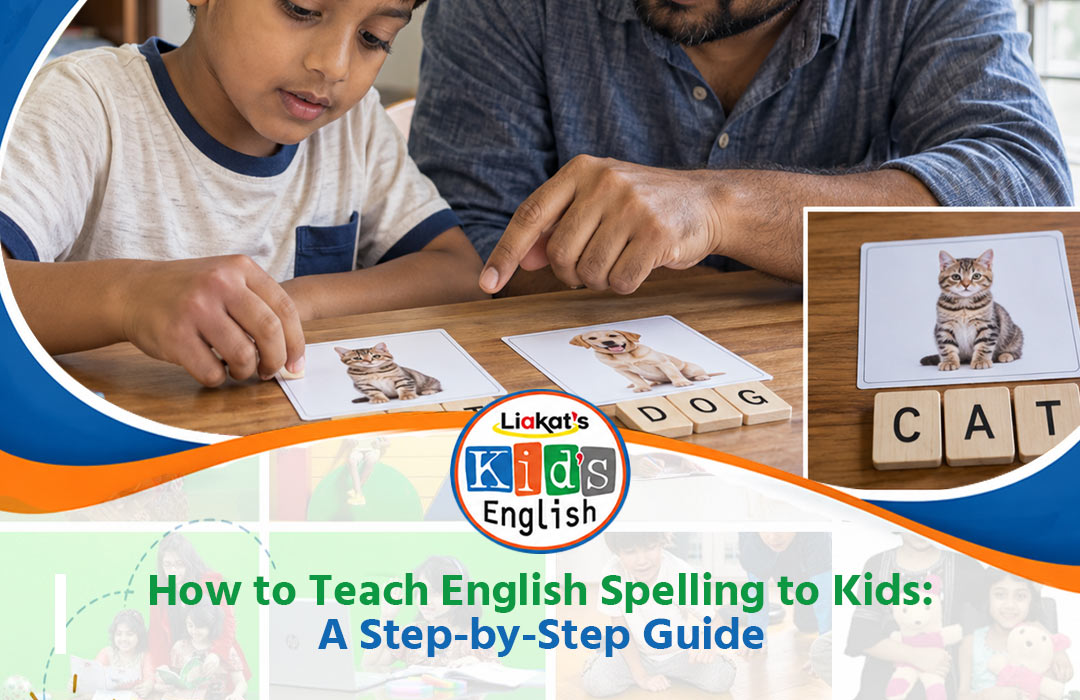
- Picture pairs. Draw or print a picture for each word, such as a sun and a boy for sun/son. Ask your child to match the picture to the right spelling.
- Homophone memory game. Write each word on a small card. Turn them face down and find the matching sounds, just like a memory game.
- Fill in the blank. Write sentences with a missing word and let your child choose between two options.
- Silly sentences. Challenge your child to make one sentence with both words, such as “I can see the sea.”
- Homophone jokes and riddles. Humour makes learning stick. Our English riddles for kids post is a good place to find inspiration.
For more play-based ideas, explore our guides on English learning games for kids and fun grammar exercises for kids.
Mini Quiz: Choose the Right Word
Try this quick quiz with your child. Cover the answers first!
- The ___ is shining in the sky. (sun / son)
- I can ___ music with my ears. (hear / here)
- Our team ___ the match. (one / won)
- Cars drive on the ___. (road / rode)
- I want to come ___. (to / too / two)
- The children took ___ lunch boxes. (their / there / they’re)
- Nice to ___ you. (meat / meet)
- She ___ a cake for the party. (made / maid)
Answers: 1. sun, 2. hear, 3. won, 4. road, 5. too, 6. their, 7. meet, 8. made
Common Mistakes Kids Make With Homophones
- Writing the sound instead of the meaning. A child hears “sun” and writes “son” without thinking about the sentence.
- Mixing up their, there and they’re. This is the most common mistake in school writing.
- Using “to” for everything. Kids often forget the “too” and “two” spellings.
- Guessing without reading the sentence again. Teach your child to ask, “Which meaning fits here?”
If you notice these mistakes often in your child’s notebook, you may also find our post on common mistakes Bangladeshi kids make in English writing helpful.
Reading Helps Too
The more children read, the more often they see homophones used correctly in real sentences. Short stories and simple paragraphs are a great start. Explore easy English storybooks to improve vocabulary and our English paragraphs for kids for easy reading practice at home.
Frequently Asked Questions
What is a homophone in simple words for kids? A homophone is a word that sounds exactly like another word but has a different meaning, and usually a different spelling. For example, “sea” and “see”.
What is the difference between homophones and homographs? Homophones sound the same but are spelled differently, like “write” and “right”. Homographs are spelled the same but may have different meanings, like “tear” (a drop from the eye) and “tear” (to rip).
At what age can children learn homophones? Most children are ready once they can read and write simple sentences, often in the early primary years. Younger children can start by playing listening games with easy pairs like sun/son.
How many homophones should my child learn at a time? Two or three pairs a week is a comfortable pace. Practise them in sentences, not as a long list to memorise.
My child understands English well but still makes homophone mistakes. Is that normal? Yes. Homophones are about spelling and meaning, not just speaking. Regular reading, short writing practice and a little patience will fix this over time.
Should I enrol my child in an English class? If your child needs regular guidance and a friendly learning environment, a structured class can help a lot. Read our guide on how to choose the right spoken English course for your child to decide what fits best.
Final Thoughts
Homophones may confuse children at first, but they are also one of the most enjoyable parts of learning English. Start with easy pairs, add pictures and games, share simple memory tricks, and keep practice short and cheerful. Soon your child will confidently tell the difference between “see” and “sea”, and “their” and “there”.
And you do not have to do it alone.
Help Your Child Learn English With Confidence
At Liakat’s Kids, we help children in Dhaka build strong foundations in spoken English, vocabulary, reading and writing through fun, activity-based lessons in a caring and friendly environment. Explore our courses for every age:
Looking for a trusted centre near you? Read why parents choose us as the best English learning centre for kids in Dhaka.
Book a Free Trial Class Today
Call Us Now: 01830 77 40 60
Flat# C-2, House# 5/1, Block-D, Lalmatia, Mohammadpur, Dhaka