For many parents, choosing the right education path for their child can feel confusing — especially when it comes to English learning. A common question we hear is: “My child already studies in an English Medium school, so do they really need a separate spoken English course?” This is a completely valid question, and the answer is more nuanced than a simple yes or no. In this blog, we’ll break down exactly what each option offers, where the gaps are, and how to make the best decision for your child’s future.
Understanding What an English Medium School Offers
In an English Medium school, the entire academic curriculum — including subjects like Math, Science, and Social Studies — is taught in English. This immersive academic environment has clear advantages:
- Children build strong reading and writing skills in English from an early age
- They become familiar with academic vocabulary across multiple subjects
- They develop a solid grammatical foundation through structured coursework
- They are exposed to English daily, across various subjects, not just in a dedicated language class
These are valuable, long-term benefits, and they form an important part of a child’s overall English education.
Where English Medium Schools Often Fall Short
Despite these strengths, English Medium schools have a common limitation: they tend to focus heavily on academic English — reading, writing, and grammar — while spending relatively little time on conversational speaking practice. This means many students can write a well-structured essay but still struggle to hold a confident, natural conversation in English.
This gap often becomes obvious in real-life situations, such as:
- Speaking up confidently during interviews or presentations
- Having a casual, natural conversation with a native or fluent English speaker
- Thinking and responding quickly in English, without translating mentally from their first language
- Speaking with correct pronunciation, tone, and rhythm
This happens because speaking is a distinct skill that requires active practice, real-time feedback, and a low-pressure environment to build confidence — something that’s often hard to achieve in a large classroom focused primarily on academic curriculum and exam preparation.
What Makes a Spoken English Course Different?
A dedicated spoken English course is specifically designed to fill this gap. Unlike general academic classes, spoken English courses focus on:
- Real-life conversation practice — Practicing everyday scenarios like introductions, shopping, ordering food, and casual conversations
- Pronunciation and accent correction — Individual feedback to help children speak more clearly and naturally
- Confidence and public speaking — Activities like presentations, storytelling, and group discussions that build comfort speaking in front of others
- Personalized attention in small groups — Smaller class sizes allow instructors to give direct feedback to each child, something that’s harder to achieve in large school classrooms
Because of this focused approach, many children — even those who already attend English Medium schools — see noticeable improvement in their speaking confidence and fluency after joining a dedicated spoken English course.
Real-World Example: Why Both Matter Together
Imagine two students. One studies only in an English Medium school, with no extra speaking practice. The other studies in the same school but also attends a structured spoken English course. Over time, the second student is likely to:
- Speak more confidently and naturally in conversations
- Have clearer pronunciation and fewer hesitations while speaking
- Feel more comfortable in interviews, presentations, or public speaking situations
- Apply their academic English knowledge more practically in real-life settings
This example illustrates why the two approaches work best when combined, rather than treating them as competing options.
So, Which One Should You Choose?
The truth is, this isn’t really an “either-or” decision. English Medium schools and spoken English courses serve different, complementary purposes:
- School builds the academic foundation — reading, writing, grammar, and subject knowledge
- Spoken English course builds the practical, real-world speaking confidence that schools often don’t have time to focus on
When combined, these two approaches give children both the knowledge and the confidence to use English effectively in real life — not just in exams. To understand more about how spoken English classes specifically benefit children, read our blog Top 6 Benefits of Spoken English Classes for Kids.
When Should You Start a Spoken English Course?
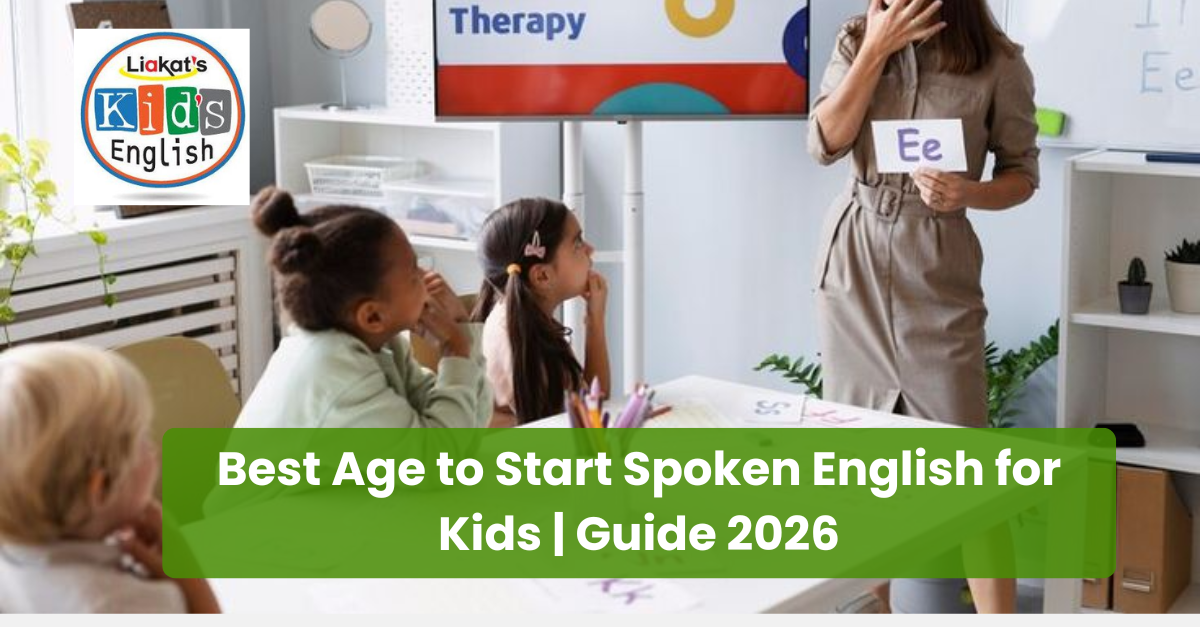
You don’t need to wait until your child struggles with speaking to start a spoken English course — in fact, starting early often produces the best results. Whether your child is just starting school or is already a few years in, it’s worth exploring the right age to begin. We’ve covered this in detail in our blog Best Age to Start Spoken English for Kids.
If you’re also looking for practical ways to support your child’s speaking skills at home, alongside formal classes, check out our guide: How to Improve English Speaking Skills for Children, which includes simple, effective daily habits parents can use.
How Liakat’s Kids Bridges the Gap
At Liakat’s Kids, we specialize in exactly this gap-filling role. Our spoken English program is designed to work alongside your child’s regular school education, giving them the conversational confidence and practical speaking skills that traditional academic settings often don’t fully cover.
Our curriculum is built around five core areas: Speaking, Creative Writing, Grammar, Vocabulary, and Pronunciation, with age-specific courses ranging from Play & Nursery to Class 7–8. We keep our class sizes small so every child receives personal attention and meaningful speaking practice, rather than getting lost in a large group.
Many of our students already attend English Medium or other schools, and they join us specifically to strengthen the speaking confidence that complements their academic learning. This combination has helped many children become genuinely fluent, confident English speakers — not just strong test-takers.
Final Thoughts
Choosing between a spoken English course and an English Medium school isn’t really necessary — the smartest approach is often to combine both. School provides the academic foundation, while a dedicated spoken English course builds the real-world speaking confidence children need to truly use the language effectively.
If you want your child to benefit from both worlds, explore our courses here and find the right program for their age and level. Visit our homepage today and give your child the gift of confident, fluent English communication.