Every parent wants their child to grow up confident, smart, and ready for the future. One of the biggest questions parents ask today is: “What is the best age for my child to start learning spoken English?” This question matters more than most people think, because the age at which a child starts learning a new language can shape how naturally and how fast they pick it up. In this guide, we will explain everything you need to know about the right age to start spoken English, why it matters, and how to choose the right learning path for your child.
Why Does Age Matter So Much in Language Learning?
Children’s brains are not the same as adult brains. A child’s brain is far more flexible, especially in the early years. Scientists call this flexibility “neuroplasticity.” Between the ages of 2 and 10, a child’s brain is wired to absorb new sounds, words, and grammar patterns almost automatically — without needing to “study” the way adults do.
This is why young children who grow up hearing two languages at home often become naturally bilingual, while adults learning a second language usually have to work much harder and still end up with an accent. The same idea applies to spoken English. If a child starts early, their brain treats English almost like a second mother tongue. If they start later, it becomes more of a “subject” they have to learn, which can feel harder and less natural.
This is exactly why so many parents are now asking about the best age to begin spoken English classes, rather than waiting until their child is much older.
The Critical Period for Language Learning
Researchers often refer to early childhood as the “critical period” for language acquisition. During this stage, which roughly covers ages 3 to 8, children can:
- Pick up new vocabulary quickly through repetition and play
- Copy pronunciation and accent almost perfectly, just by listening
- Understand grammar patterns naturally, without memorizing complicated rules
- Build long-term confidence in speaking, since the language feels familiar rather than foreign
After this critical period, language learning is still very much possible, but it usually requires more conscious effort, more practice, and more patience. This doesn’t mean older children can’t become fluent — it simply means that starting early gives a real head start.
Breaking Down the Best Age Ranges
Let’s look at how spoken English learning can be approached at different stages of childhood.
Ages 3–5 (Play & Nursery Level)
At this age, children learn best through play, not through formal lessons. Songs, rhymes, picture cards, simple games, and storytelling are the most effective tools. The goal at this stage is not perfect grammar — it’s building familiarity and comfort with English sounds and basic words. A 3 to 5-year-old who regularly hears and plays with English in a fun environment will naturally develop a strong foundation for later years.
Ages 5–7 (KG Level)
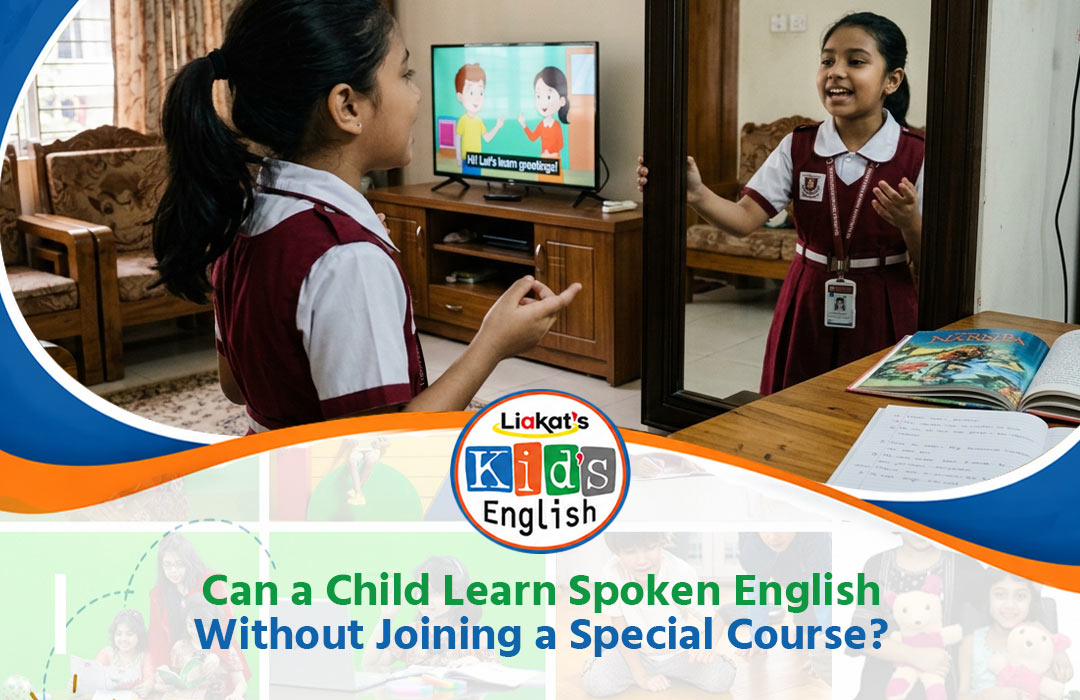
By this age, children are ready to move from single words to short sentences. This is a great time to introduce simple conversations, such as greetings, asking questions, and describing everyday objects. Children at this age also start to enjoy small group activities, role play, and interactive storytelling, which helps build both vocabulary and speaking confidence.
Ages 7–12 (Class 1–8)
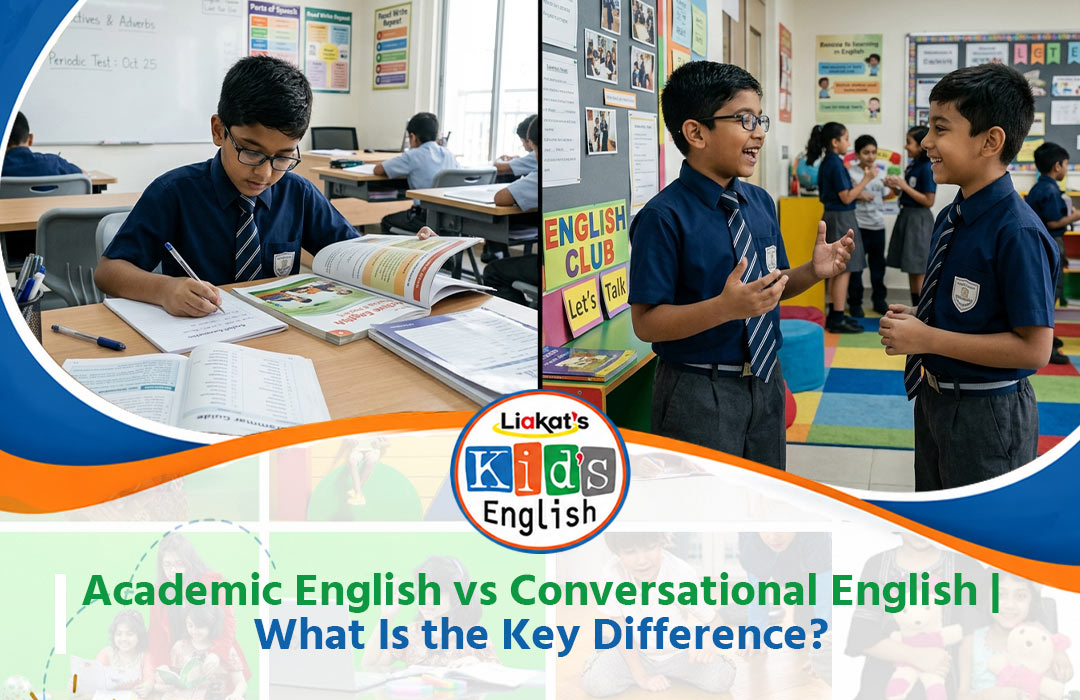
This stage is ideal for combining grammar, vocabulary, and fluent speaking together. Children in this age range can understand more complex sentence structures, participate in discussions, and start expressing their own opinions in English. This is often the stage where formal spoken English courses make the biggest difference, since children are mature enough to follow structured lessons but still young enough to learn quickly.
What If My Child Is Already Older?
Many parents worry that they have “missed the window” if their child is past the age of 8 or 10. The good news is that this is simply not true. While early childhood does offer a natural advantage, older children and even teenagers can become confident, fluent English speakers with the right method, the right teacher, and consistent practice. The key is not to give up just because the “ideal age” has passed, but instead to find a course that is specifically designed for your child’s current age and level.
Why Starting Early Brings Long-Term Benefits
Starting spoken English early doesn’t just help with language — it has a ripple effect on many other areas of a child’s development. Early starters usually:
- Feel more confident speaking in front of others, including teachers and classmates
- Develop more natural pronunciation and accent
- Perform better in school, since much of the curriculum and many resources are in English
- Build stronger social and communication skills overall
If you want to understand these advantages in more detail, we’ve written a complete breakdown in our blog Top 6 Benefits of Spoken English Classes for Kids, where we explain exactly how spoken English shapes a child’s confidence, academic performance, and future opportunities.
Age Is Important, But So Is the Right Method
Choosing the right age to start is only one part of the puzzle. Even if a child starts at the “perfect” age, without the right teaching method, structured curriculum, and trained instructors, progress can still be slow. This is why many parents also ask a related question: “Is an English Medium school enough, or do I also need a separate spoken English course?” We’ve answered this question in detail in our blog Spoken English Course vs English Medium School, where we compare both options and explain which combination works best.
Tips for Parents: How to Support Early English Learning at Home
While enrolling your child in a structured course is important, there are also simple things you can do at home to support their learning:
- Speak simple English daily — even short conversations during meals or playtime help.
- Read English picture books together — this builds vocabulary in a fun, low-pressure way.
- Sing English songs and rhymes — music helps children remember words and pronunciation.
- Encourage mistakes, don’t correct harshly — confidence grows faster when children aren’t afraid to speak.
- Be consistent — small daily practice is far more effective than occasional long sessions.
For more detailed, step-by-step techniques, check out our blog How to Improve English Speaking Skills for Children, which covers practical methods you can use both at home and alongside formal classes.
Why Choose Liakat Kids for Spoken English?
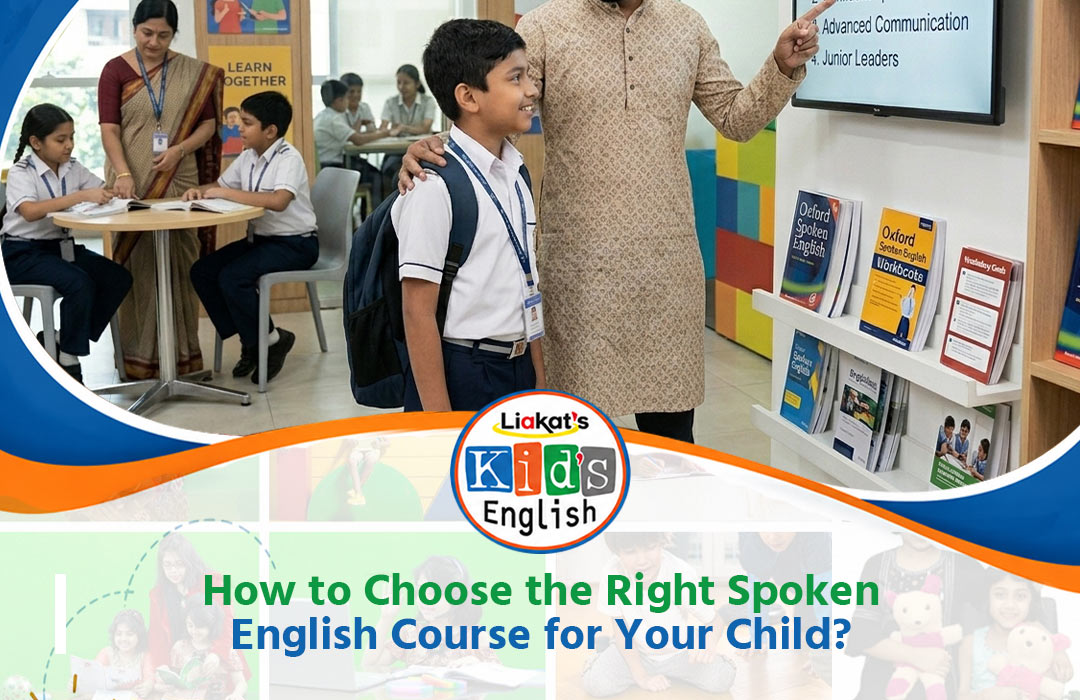
At Liakat Kids, we understand that every child learns differently, which is why our spoken English program is built around age-specific levels — from Play & Nursery all the way to Class 7–8. Our curriculum focuses on five key areas: Speaking, Creative Writing, Grammar, Vocabulary, and Pronunciation, ensuring that children don’t just memorize English — they actually learn to use it confidently in real life.
Since 2020, we have helped hundreds of children build strong English foundations through a structured, age-appropriate approach. Whether your child is just starting at age 3 or is already in school and needs to catch up, we have a course designed for their level.
Final Thoughts
The best age to start spoken English for kids is generally between 3 and 8 years old, when the brain is most receptive to language learning. However, age is not the only factor — the right teaching method, consistent practice, and a supportive learning environment matter just as much. If your child is ready to start their spoken English journey, now is a great time to take the first step.
Explore our courses here and find the right level for your child, or visit our site to learn more about our programs. Enroll your child today in a proven, effective spoken English program with Liakat Kids.